


Justin Martyr
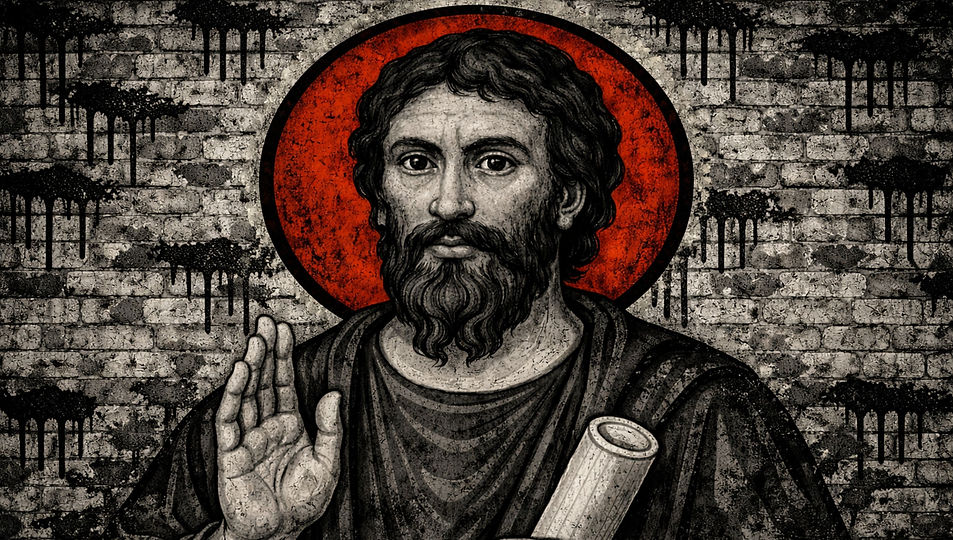
Justin Martyr - The Philosopher Who Found Christ and Defended the Early Church
Among the great thinkers of the early Christian world, few shine as brightly as Justin Martyr (c. 100–165 AD). Known both as a philosopher and a fearless defender of the Christian faith, Justin stands as one of the most influential Church Fathers of the 2nd century. His life bridged the worlds of Greek philosophy and Christian revelation, and his writings helped articulate the intellectual foundation of the early Church. His steadfast witness—ending in martyrdom—sealed his place as one of Christianity’s most important apologists.
From Pagan Philosopher to Christian Believer
Justin was born a pagan in Flavia Neapolis (modern-day Nablus) in Samaria. Gifted with a brilliant mind and a deep longing for truth, he devoted himself to philosophy. He studied Stoicism, Pythagoreanism, and especially Platonism in his search for a worldview that satisfied both reason and the human desire for meaning.
Around 130 AD, his life changed. Justin encountered an elderly man near the seashore who challenged his assumptions about philosophy and pointed him toward the Hebrew prophets and the revelation of God in Christ. This conversation convinced Justin that Christianity was not the rejection of philosophy—but its fulfillment.
After his conversion, Justin retained the philosopher’s cloak. He traveled widely, presenting Christianity as the “only sure and useful philosophy”, and eventually opened a Christian philosophical school in Rome where he taught free of charge.
His public debates and outspoken defense of the faith made him enemies, particularly the Cynic philosopher Crescens. Ultimately denounced to Roman authorities, Justin and six companions were arrested and tried by the prefect Junius Rusticus. Refusing to sacrifice to the Roman gods, they were beheaded around 165 AD. Thus he earned the name by which he is still known: Justin Martyr.
Justin’s Writings: Defending and Explaining the Faith
Justin’s surviving works are among the most valuable windows into the faith and practice of 2nd-century Christianity.
1. First Apology
Addressed to Emperor Antoninus Pius, this lengthy work:
Refutes accusations that Christians were atheists or immoral
Explains Christian moral teaching
Defends the rationality of faith
Provides the earliest detailed descriptions of baptism, Sunday worship, and the Eucharist
His description of the Eucharist is especially significant for demonstrating the early Church’s belief in the real presence of Christ.
2. Second Apology
Written to the Roman Senate, this shorter text protests the injustice of persecuting Christians solely for bearing the name “Christian.” Justin argues that true justice requires examining moral character, not religious labels.
3. Dialogue with Trypho
A detailed debate with a Jewish scholar named Trypho—likely based on Rabbi Tarphon—this work:
Argues that Jesus is the Messiah promised in the Old Testament
Defends the Christian reading of prophecy
Presents Christianity as the fulfillment of the covenant
It remains a foundational text in early Christian-Jewish dialogue and apologetics.
Theological Contributions That Shaped Christianity
Justin’s writings helped form the intellectual and theological foundation of the young Church.
1. The Logos Doctrine
Justin famously presented Jesus Christ as the Logos of God—the divine Word and Reason through whom the world was made. By using familiar Greek philosophical terminology, he showed that Christianity was not irrational, but the completion of the philosophical quest for truth.
He taught that:
God planted “seeds of the Logos” in all people
Philosophers like Socrates and Plato glimpsed fragments of truth
The fullness of divine Reason was revealed only in Christ
This approach profoundly shaped Christian theology for centuries.
2. Fulfillment of Prophecy
Justin emphasized the unity of Scripture. He insisted that the Old Testament prophecies about the Messiah were fulfilled in Jesus and that this fulfillment was a key proof of the truth of Christianity.
3. Moral Teaching
Justin highlighted Christian virtues—chastity, forgiveness, charity, patience—to counter pagan accusations of immorality. His works stress that the transformed life of believers is itself evidence of the Gospel’s power.
Justin’s Fight Against Early Heresies
Like many early Christian leaders, Justin confronted a variety of teachings he believed distorted the Gospel.
1. Marcionism
Marcion taught that:
The God of the Old Testament was a cruel, lesser deity
Christ revealed a new, separate God of love
The Old Testament should be rejected
Only a heavily edited New Testament should be accepted
Justin responded by:
Emphasizing the continuity between the Old and New Testaments
Affirming that the same God is Creator and Redeemer
Writing a (now lost) treatise Against Marcion
Marcionism became one of the biggest theological threats of the era, and Justin’s arguments helped the Church articulate a unified biblical canon.
2. Gnosticism (including Valentinianism)
Gnostic groups taught:
Salvation comes through secret knowledge
The material world is evil
Christ was a spiritual being who only appeared human (Docetism)
Justin denounced these teachings, identifying their roots in demonic deception. He pointed to the real humanity of Christ, the goodness of creation, and the universality of salvation through Christ—not secret wisdom.
3. Ebionite-like “Man of Men” Christology
Some Christians taught that Jesus was a merely human man who became the Messiah when the Christ-spirit descended on him. Justin strongly rejected this view as inconsistent with apostolic teaching, affirming instead that Jesus is divine, eternal, and the incarnate Word of God.
4. Practices Associated with Idolatry
Justin condemned those who believed Christians could safely participate in pagan rituals, such as eating meat sacrificed to idols. He considered such actions spiritually dangerous and evidence of false believers causing division.
Legacy: Philosopher, Teacher, Martyr
Justin Martyr’s life and writings offer a remarkable picture of early Christianity:
Devotion to truth
Intellectual engagement with culture
Defense of persecuted believers
Deep reverence for Christ as the incarnate Word
He succeeded in what few have done: presenting Christianity in the language of philosophy without losing its spiritual power. Today he is honored as the patron saint of philosophers and lecturers, a fitting tribute for a man who united faith and reason so beautifully.