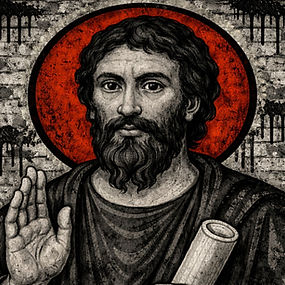
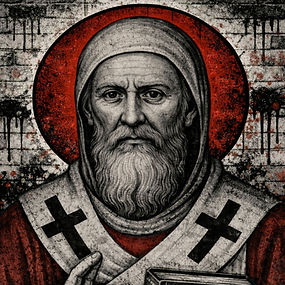
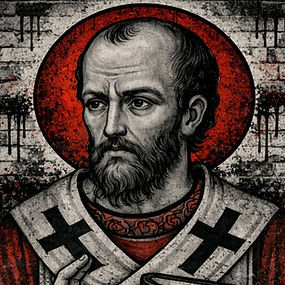
EARLY CHURCH FATHERS

Who Were the Early Church Fathers—and Why Do They Still Matter?
When we think about the foundations of Christianity, many of us go straight to the Bible, the apostles, or early martyrs of the faith. But between the age of the Apostles and the formation of Christian doctrine as we know it today stood another crucial group: the Early Church Fathers.
These theologians, bishops, and writers shaped the Christian faith during its most formative centuries. Their influence stretches across theology, apologetics, Scripture, worship, and the very vocabulary we use to talk about God.
In this post, we’ll explore who they were, what they contributed, and why their defense of Christian truth still matters today.
The Three Major Periods of the Church Fathers
The Church Fathers are traditionally grouped into three overlapping historical periods. Each reflects different challenges facing the Church and different forms of theological development.
1. The Apostolic Fathers (c. 60–150 AD)
These early figures either knew the Apostles personally or were directly shaped by their immediate teaching. Their writings reflect a Church still living in the shadow of the New Testament era.Key figures: Clement of Rome, Ignatius of Antioch, Polycarp of Smyrna.
2. The Ante-Nicene Fathers (c. 150–325 AD)
This period includes apologists and theologians who wrote before the Council of Nicaea. Their works respond to Roman persecution, philosophical objections, and emerging internal heresies.Key figures: Justin Martyr, Irenaeus of Lyons, Clement of Alexandria, Origen, Tertullian.
3. The Nicene and Post-Nicene Fathers (after 325 AD)
After the legalization of Christianity, the Church entered a new era of doctrinal clarification. These theologians helped define orthodoxy at ecumenical councils and produced some of the most enduring Christian writings.Key figures: Athanasius, John Chrysostom, Jerome, Augustine of Hippo.
What Did the Church Fathers Contribute?
The impact of the Early Church Fathers is difficult to overstate. Their work remains deeply intertwined with nearly every aspect of Christian belief and practice.
1. Defending Christianity
Faced with Roman critics and competing philosophies, the Fathers wrote extensively to defend the credibility and coherence of the Christian faith. Their apologetic writings helped Christianity gain intellectual respect in the ancient world.
2. Developing Core Doctrine
Many doctrines Christians now take for granted—such as the full divinity and humanity of Christ, or the three Persons of the Trinity—were articulated in response to debates of the time. Their work formed the backbone of creeds such as the Nicene Creed.
3. Shaping the Biblical Canon
The Fathers were instrumental in discerning which writings were truly apostolic and inspired. Their collective judgment helped solidify the canon of the New Testament.
4. Preserving Early Christian Life
Their letters, sermons, and treatises provide rich historical insight into worship practices, Church leadership, and the life of early Christian communities. Through them we learn about the early Mass, the role of bishops, and the communal life of believers.
The Heresies They Fought—and Why It Mattered
The early centuries of the Church were marked by intense theological disputes. Many groups proposed ideas that contradicted apostolic teaching, especially regarding Christ’s nature, the Trinity, creation, and salvation. The Fathers’ responses to these errors shaped orthodox Christianity.
Christological and Trinitarian Heresies:
-
Arianism Taught that Christ was a created being rather than eternally divine. Athanasius famously defended the Church’s belief in Christ’s full divinity, leading to the First Council of Nicaea.
-
Docetism Claimed Jesus only seemed to have a physical body. Ignatius and Irenaeus insisted on the full humanity and physical suffering of Christ.
-
Monophysitism Taught that Christ had only one blended nature instead of true divine and human natures. This was rejected at the Council of Chalcedon.
-
Nestorianism Proposed that Christ was essentially two persons united in a moral relationship. Cyril of Alexandria argued instead for the unity of Christ's person.
-
Modalism Denied the Trinity by claiming the Father, Son, and Spirit were merely different “modes” of one divine person.
Soteriological and Creation-focused Heresies:
-
Gnosticism A dualistic movement that saw the physical world as evil and salvation as secret knowledge. Irenaeus’ Against Heresies remains one of the most important refutations of Gnosticism.
-
Marcionism Rejected the Old Testament and portrayed its God as inferior to the God of the New Testament.
-
Pelagianism Denied original sin and claimed salvation was achievable through human willpower alone. Augustine argued forcefully for the necessity of divine grace.
-
Donatism Insisted that sacraments were only valid if performed by morally pure clergy. Augustine countered that the efficacy of the sacraments comes from Christ, not the minister.
Through these debates, the Fathers established the boundaries of Christian orthodoxy—boundaries that continue to guide the Church today.
Why the Church Fathers Still Matter
The Early Church Fathers were not mere historical figures. Their writings remain essential for anyone seeking to:
-
understand the roots of Christian doctrine
-
interpret Scripture within its historic context
-
grasp how the Church preserved unity amid controversy
-
appreciate how worship and theology developed in the ancient world
They provide a bridge between the Apostles and the later Christian tradition, preserving insights that continue to enlighten believers across denominations.
Whether you’re studying theology, exploring the history of the Church, or simply looking to deepen your faith, the Fathers offer a rich treasury of wisdom that still resonates today.
Read More: